Homeowner guide · Energy-efficient
How to Read an NFRC Window Label
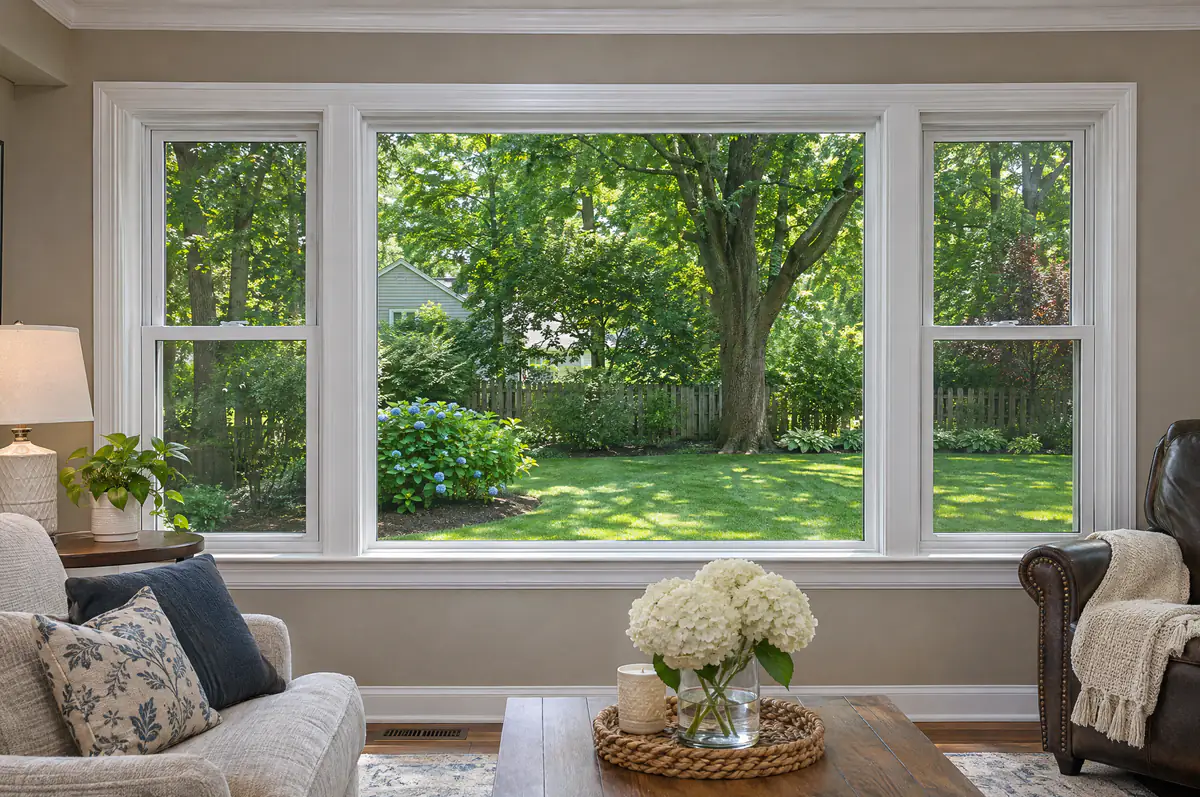
The National Fenestration Rating Council label is the closest thing windows have to a nutrition label. It turns a product’s energy performance into a handful of numbers that can be compared across brands, materials and styles. Once you know what each number means, you can tell in a few seconds whether a window suits a Central Ohio house, and whether two quotes are offering comparable products.
What the label is, and what it isn’t
The NFRC is an independent nonprofit that runs the rating and certification program behind the label. The ratings describe the whole window product, glass, spacer and frame together, tested and simulated to a common standard. That’s why the label is more useful than a brochure figure for the glass alone: the center of a pane usually performs better than the edges and frame, and the label accounts for all of it.
The label does not tell you how well a particular window was installed. A well-rated window set into a leaky opening will still feel drafty.
Energy-efficient windows in Columbus, OH
Low‑E glass and tight frames for Ohio winters.
The two main ratings
U-factor: how fast heat escapes
U-factor measures how readily the window lets heat flow through it, in Btu per hour per square foot per degree Fahrenheit. Lower is better. The FTC’s consumer guide gives a range of roughly 0.2 to 1.2 for windows, and calls U-factor most important in cold climates.
For Central Ohio, U-factor is the number to watch first. ENERGY STAR’s current window criteria require a U-factor of 0.25 or lower in its North-Central zone, which includes Franklin County, and 0.22 or lower in its Northern zone, which includes several counties around it, with some trade-offs allowed in the Northern zone. Our ENERGY STAR guide for Central Ohio has the county-by-county list.
Solar Heat Gain Coefficient (SHGC): how much sun heat gets in
SHGC is the fraction of the sun’s heat striking the window that ends up inside, on a scale of 0 to 1. Lower means less solar heat. Whether you want low or higher SHGC depends on climate and orientation. In winter, sun through south-facing glass is free heat; in summer, sun through west-facing glass can overheat a room.
The two ENERGY STAR zones that meet in Central Ohio treat SHGC differently. North-Central caps it at 0.40 or lower. Northern sets a floor instead, 0.17 or higher, because in colder places some solar gain is useful.
The additional ratings
The FTC notes that some ratings may not be printed on the label but may be available online or from the vendor. Ask for them when they’re missing.
Visible Transmittance (VT): how much daylight
VT measures how much visible light passes through, from 0 to 1. Higher means brighter. Coatings and extra panes that improve U-factor and SHGC can lower VT, so a very efficient window can look slightly darker. If a room already feels dim, compare VT alongside the energy numbers.
Air Leakage (AL): how much air sneaks through
Air leakage is measured in cubic feet of air per minute per square foot of window area. Lower is better. ENERGY STAR requires an air leakage rating of 0.3 or less for certified windows. Window style affects this: the FTC notes that single-hung, double-hung and sliding windows leak more air than casement, awning and hopper windows, which press their sash against the frame when closed.
Condensation Resistance (CR): how well it resists fogging up inside
CR is scored on a scale that tops out at 100. Higher is better. It reflects how well the window resists moisture forming on the room-side surfaces in cold weather. In a Central Ohio winter, with the furnace running and indoor humidity from cooking and showers, this number is worth asking about for bathrooms, kitchens and bedrooms.
Reading a label in practice
Suppose two quotes both say “energy-efficient double-pane.” Ask for each window’s NFRC ratings and line them up:
| Rating | What you want in Central Ohio |
|---|---|
| U-factor | As low as the budget allows; at or below the ENERGY STAR limit for your county |
| SHGC | Within your zone’s ENERGY STAR range; lower on hot west walls, higher can help on south walls in winter |
| VT | High enough that rooms don’t feel dim |
| Air leakage | 0.3 or lower |
| Condensation resistance | Higher numbers for humid rooms |
Small differences in U-factor add up when they’re multiplied across every window in the house. Large differences in SHGC change how rooms feel on summer afternoons. And a product line can come in several glass packages, so make sure the label you’re reading matches the glass you’re actually being quoted.
Common label mistakes
- Reading the wrong glass option. One product line can be sold with several glass packages, each with its own ratings. Match the label to the glass on your quote.
- Mixing glass-only and whole-window numbers. A brochure figure for the glass alone will look better than a whole-window label. Compare label to label.
- Treating ENERGY STAR as a ranking. It’s a pass-or-fail threshold for a climate zone, not a score. Two certified windows can differ meaningfully.
- Forgetting the frame. The same glass in a different frame produces different whole-window ratings.
- Worrying about size. NFRC ratings are calculated for a standard size of each product type, so a label can be compared with another of the same type even though your windows are a different size.
What the numbers are made of
Most of the label’s energy story comes from the glass package: Low-E coatings, gas fill and the number of panes. Our guides on Low-E and argon and double- vs. triple-pane windows explain how each one moves the numbers. The frame also matters; see frame materials compared.
Need help comparing?
A1 Windows can walk you through the ratings on the windows we’d recommend for your house, and you see the price before any work starts. Call or text (614) 333-6302 or book online, or read about our energy-efficient windows.
Frequently asked questions
Where do I find the NFRC label on a window?
New windows usually carry a temporary label on the glass or frame when they arrive, and the ratings are also listed in the product literature and on the manufacturer’s website. Ask your installer to keep the labels or give you the ratings in writing before they’re removed.
Is the U-factor the same as the R-value?
They describe the same thing from opposite directions. U-factor measures how easily heat flows through; R-value measures resistance to that flow. Windows are rated by U-factor, and lower U-factor means better insulation.
Do my existing windows have NFRC ratings?
If they were made after NFRC labeling became common, the manufacturer may be able to look up ratings from a code etched in the glass or printed on the frame. Older windows, and most original wood windows, have no rating.
Call or text · Columbus, OH
Need energy-efficient?
(614) 333-6302- We measure before we quote
- Columbus-based · 55-mile service area
More guides
All guides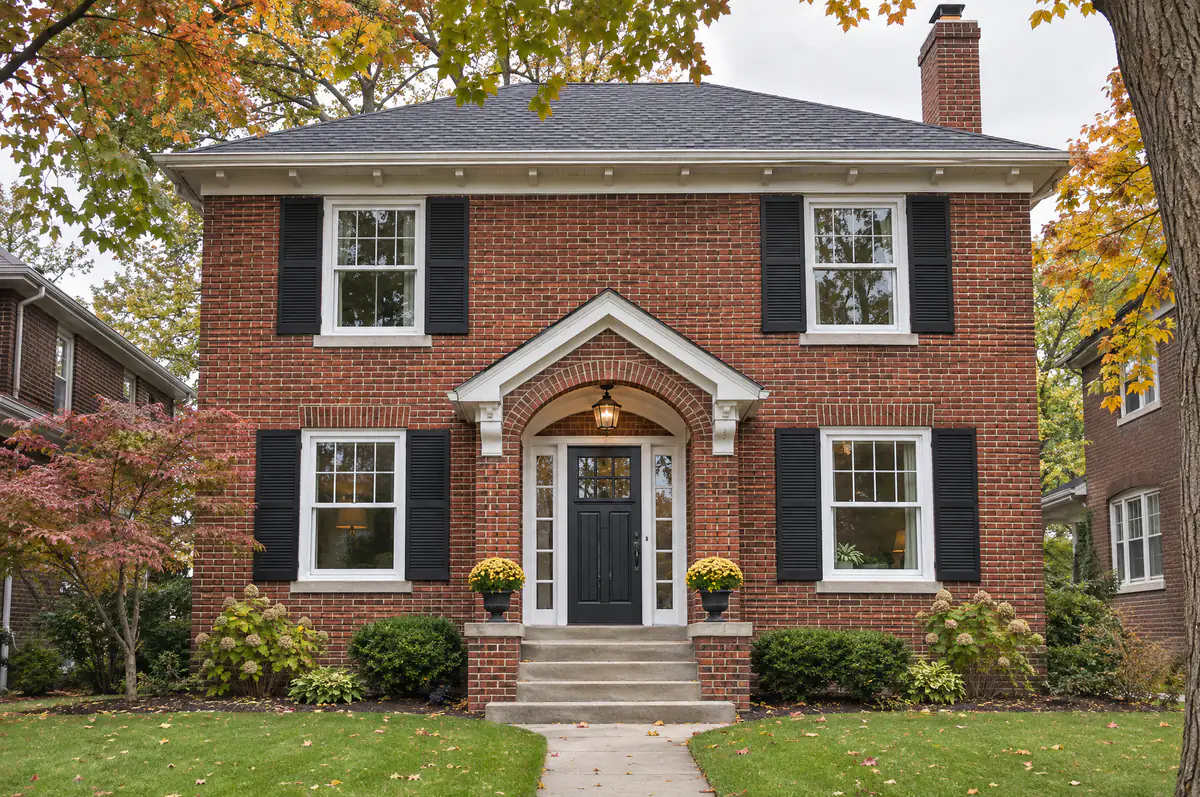
ENERGY STAR Windows in Central Ohio: Criteria by County
Central Ohio sits on a line. ENERGY STAR assigns window criteria by county, and the counties around Columbus fall into two different zones with two different sets of rules.
Low-E Coatings and Argon Gas, Explained
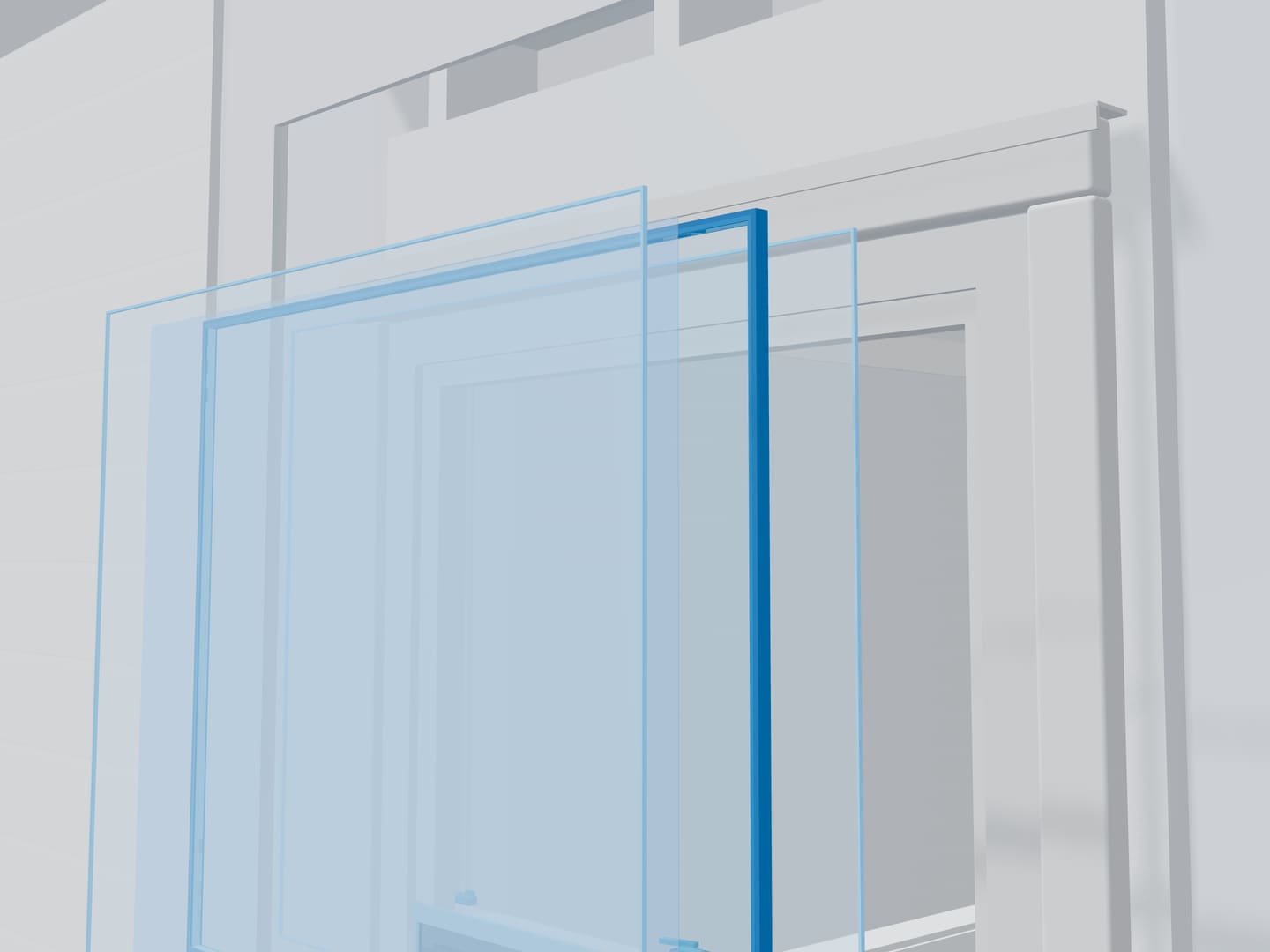
Two technologies do most of the work in a modern energy-efficient window, and you can’t see either of them. Low-E coatings control how heat moves through the glass, and gas fills slow the heat that tries to cross the space between the panes.
Winter Condensation on the Inside of Your Windows
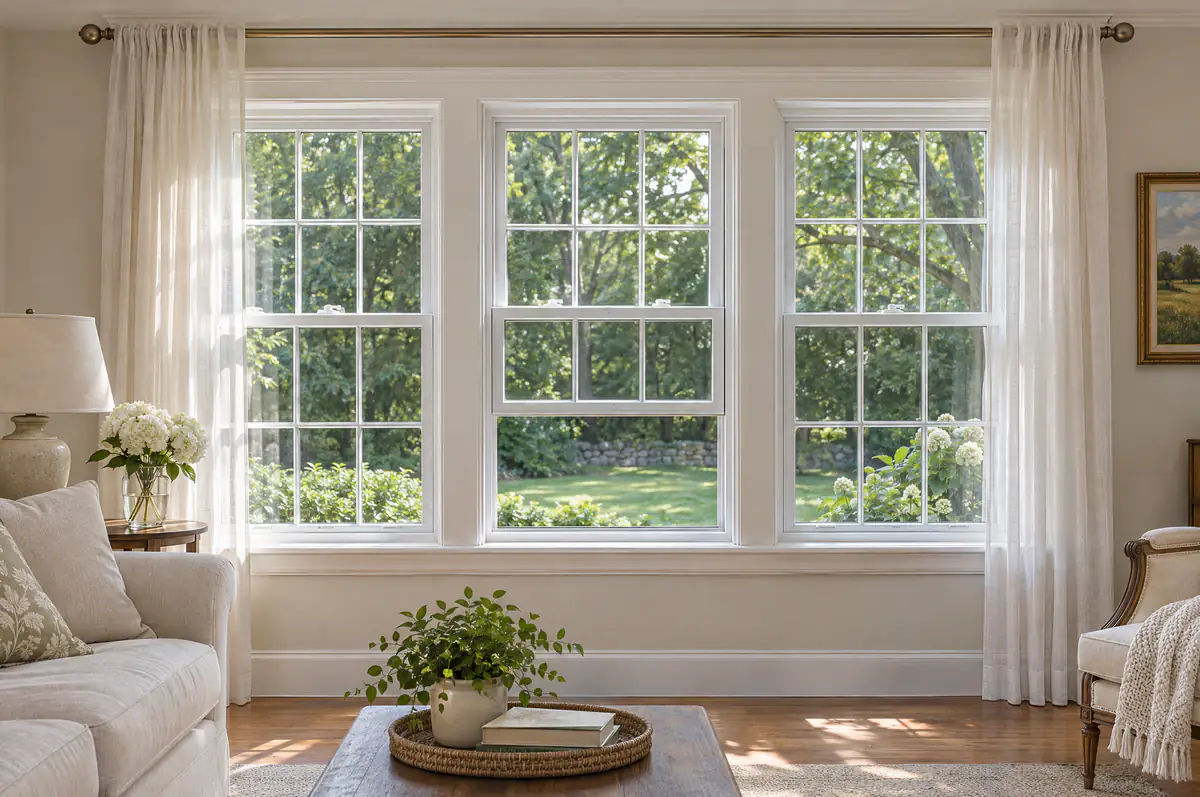
Water on the room side of the glass in winter is a sign that the air in the house holds more moisture than the coldest surface in the room can handle. Most of the time the fix starts with the air, not the window.