Powell counted fewer than 2,400 residents in 1990. It has grown several times over since then, and most of its homes were built in the decades that followed. Ask what fails first in windows of that generation and you get a short list: sealed glass, balances, casement operators and the small latches that hold everything together.
Casement and awning windows
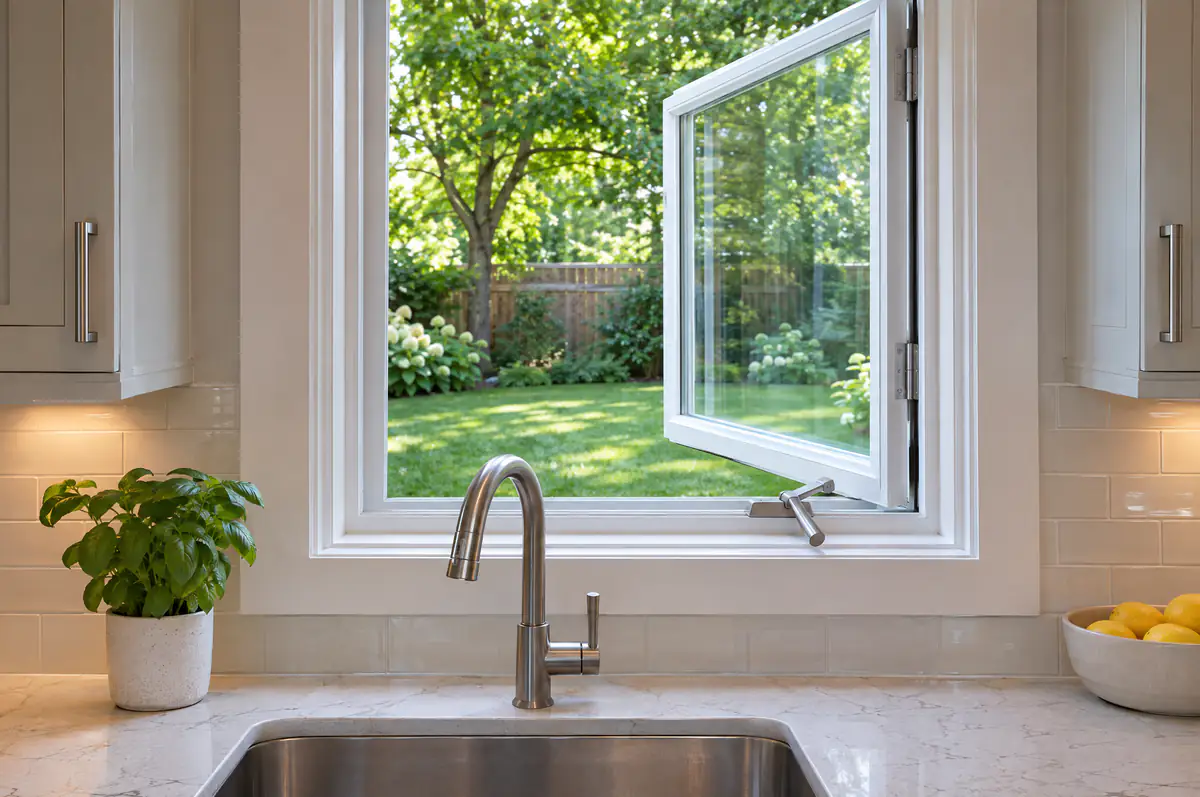
Crank-out windows have more moving parts than most, and those parts work hard. When something goes wrong, it usually shows up as one of these:
- The crank spins freely. The gears in the operator have stripped. The operator is replaced on its own.
- The sash sags or rubs the frame. The hinges, which slide in a track along the top and bottom, have worn or bent.
- The window won’t pull tight. The lock or its keepers are out of adjustment or broken, which leaves a draft even when the window looks closed.
Each of those is a parts repair, not a new window. See lock and crank repair and casement windows.
Double-hungs that won’t behave
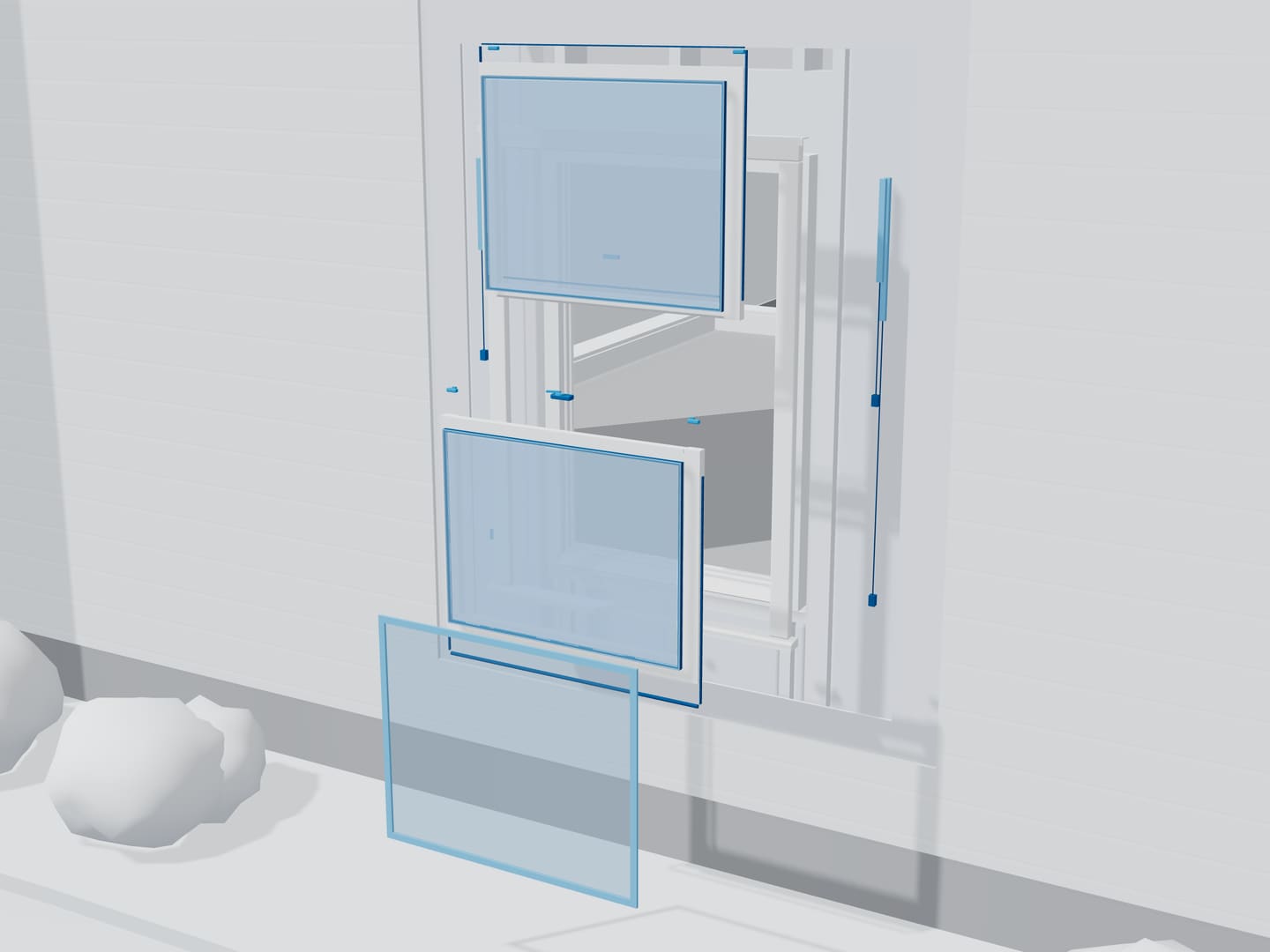
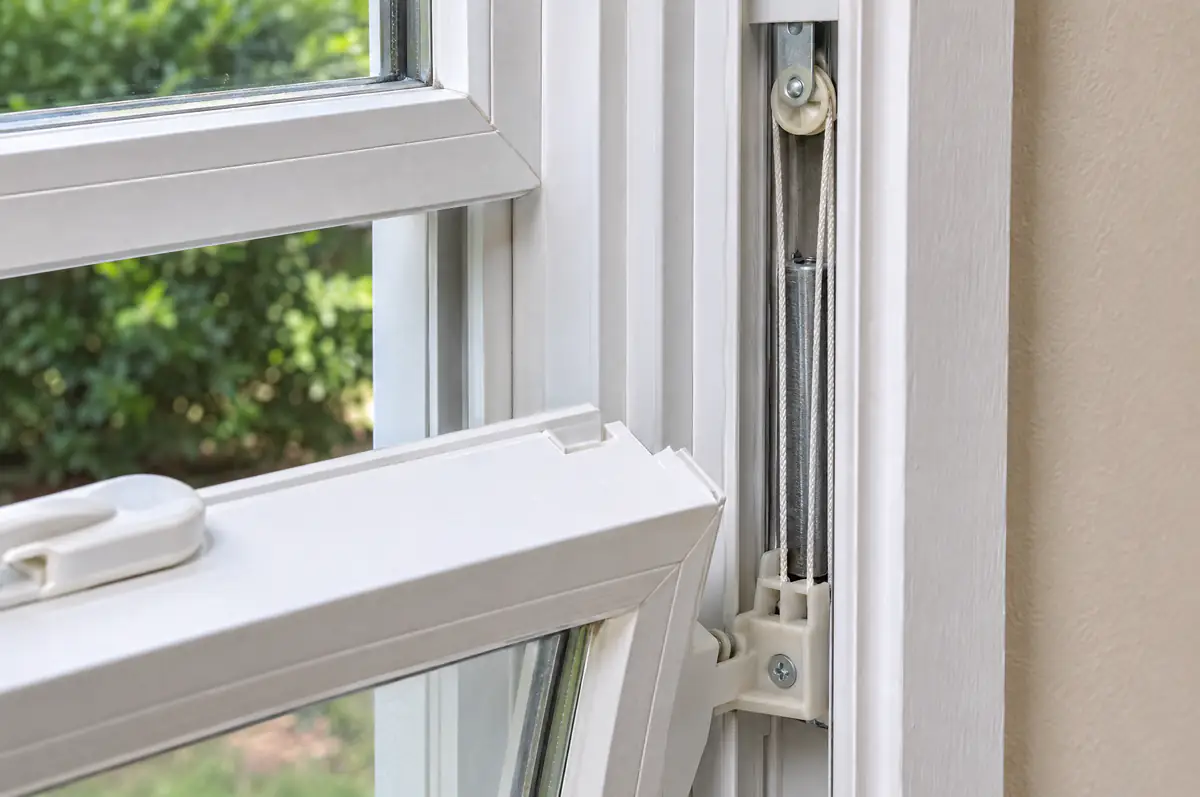
If a double-hung sash drops, creeps or feels heavy, the balance in the jamb has failed. If it won’t tilt in, or tilts and falls out of the track, a tilt latch or pivot is broken. Both are replaceable. See sash and balance repair.
Balances come in several types, including spiral balances in a tube, block-and-tackle balances and coil spring balances, and each is sized to the weight of the sash. Getting the matching part is what makes the repair last.
Glass
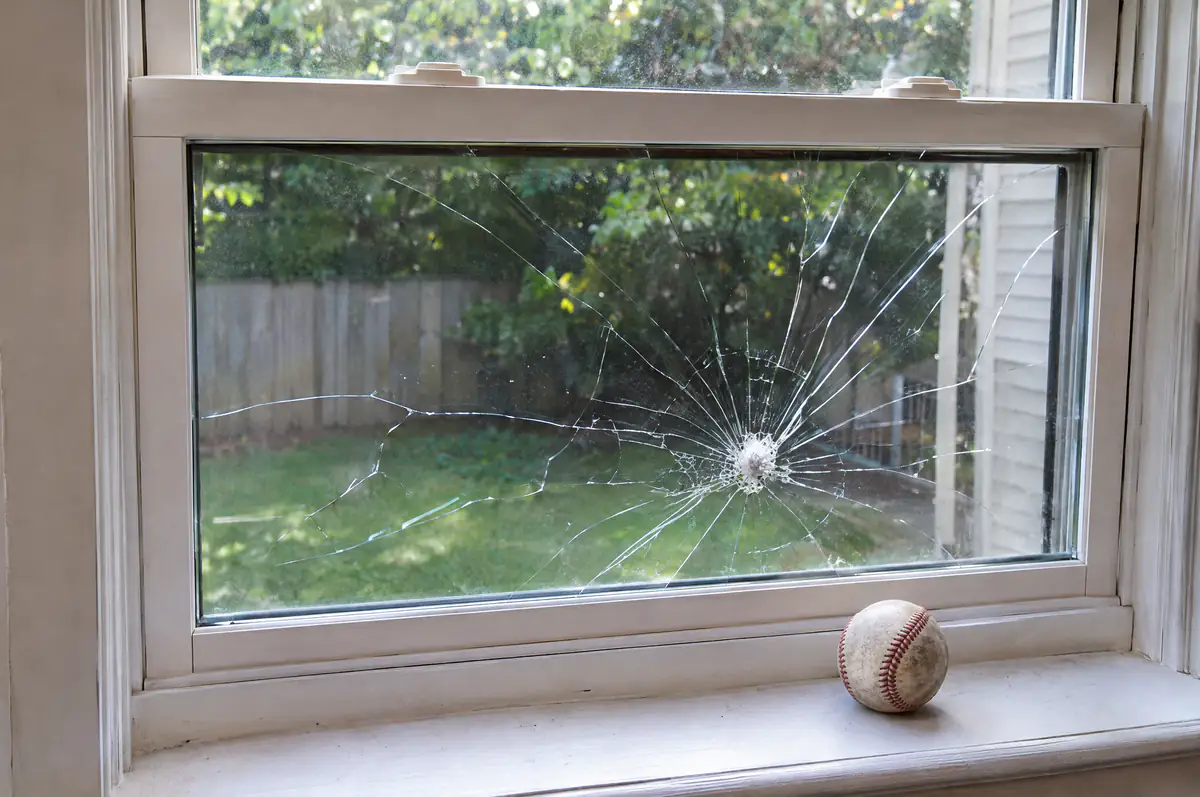
A milky haze between the panes means the edge seal on the insulated unit has failed, and moisture is getting in. It won’t clear up, but the sealed unit can usually be replaced in the existing sash with the frame left in place. Cracked glass is handled the same way. See foggy window repair and window glass replacement.
If the haze is on the room side and wipes off, that’s condensation from indoor humidity, and the glass is fine. While a technician is there, it’s worth checking the other windows of the same age too.
Downtown Powell
The city’s Historic District, first established in 1987, roughly follows the original corporation limits. The Powell Architectural Guidelines are the standard the Historic District Commission uses to decide applications for certificates of appropriateness there. A repair that keeps the window’s size, shape and material is the least disruptive option. If your property is in the overlay, ask the city’s development staff what your project needs before work starts. Older wood windows in the district can often be repaired too; see wood window repair.
Screens and seals
Casement screens sit on the inside and double-hung screens on the outside, and both tear, bend and lose their spline. Weatherstripping flattens with age. These are small jobs that pay off every season. See window screens.
Repair first, replace when it’s time
A technician looks at the window, explains what has failed and quotes the repair. If the frame itself is failing, you’ll hear that instead, and the window replacement page explains the options. Either way, you see the price before work starts.
Call or text (614) 333-6302, or book online. If it’s a casement, say whether the crank turns at all; that one detail helps us bring the right part. A1 Windows is based at 1221 Stimmel Rd, about 16 miles south of Powell.